


Range Rover Hybrid vs Gas vs PHEV: Ownership Guide
Range Rover Gas Drivetrains
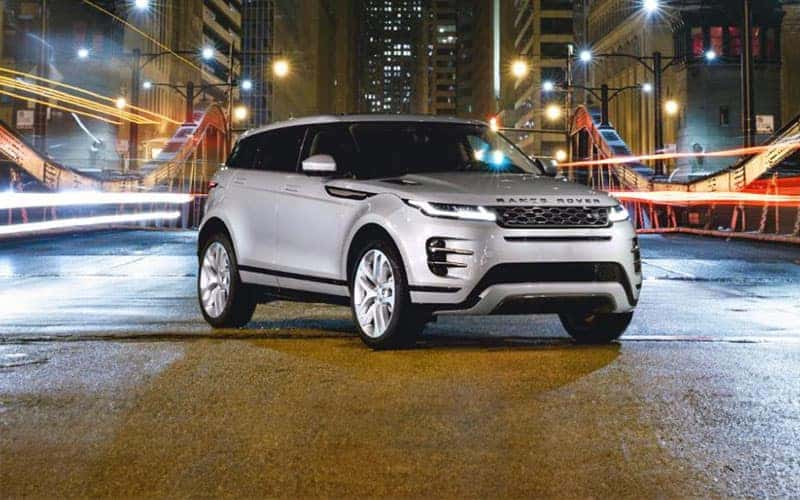
Gasoline internal combustion engines obviously aren’t a new technology, but while the overall idea of how a piston engine works has remained the same, the details of how this is achieved have been refined and honed quite a lot over the years. Chief among these improvements has been gasoline direct injection, which uses extremely high-pressure fuel injectors to spray atomized fuel directly into the cylinder, making the engine simultaneously much more powerful and also much more efficient. Coil-on-plug ignition creates a hotter spark from the spark plug, further enhancing the power and efficiency without even having to change the type of spark plug being used. Turbochargers harness the energy of exhaust gases leaving the engine and use that to compress the intake air. Like blowing on a campfire, this helps to improve the combustion of the gasoline in the cylinder. While there have been plenty of other advancements over the years, these three are the biggest contributors to the more recent huge leaps forward in volumetric efficiency.
Range Rover Hybrid Drivetrains
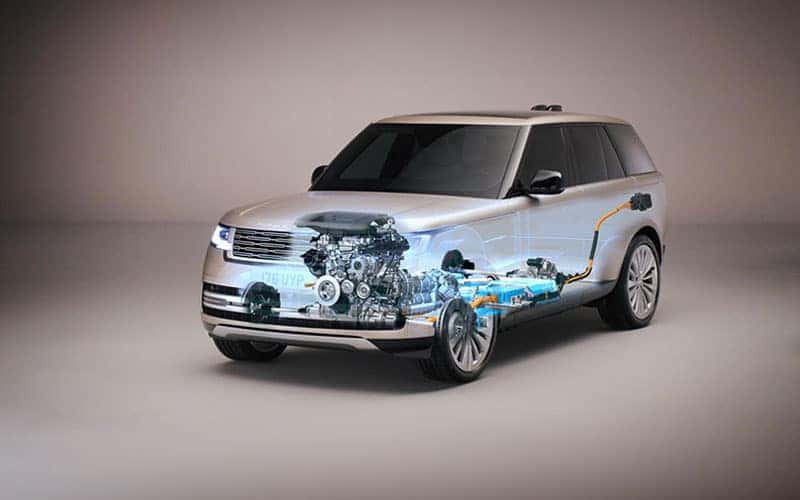
Hybrids have been fairly commonplace for more than a couple of decades at this point. These work by harnessing the otherwise wasted energy from braking or coasting and turning it into electricity to supplement the power of the engine. While these systems have improved a lot over the years, they still tend not to be especially impressive in the performance department. Land Rover, therefore, decided to skip right over this type of drivetrain and instead build plug-in hybrid (PHEV) drivetrains. PHEV drivetrains can be found in the full-size Range Rover as well as the Range Rover Sport, and are much more advanced than “traditional” hybrids.
A PHEV can plug in and charge at home, then drive purely on electric power. Battery packs are smaller than those in pure electric vehicles, and the all-electric range therefore isn’t nearly as long, but for most people, daily commuting to work can be achieved without using any gasoline. A PHEV does also behave more or less like a traditional hybrid once the battery is drained, but the best fuel economy comes when you have a freshly charged battery. PHEV drivetrains are also able to combine the power of the gasoline engine with the electric motor for huge amounts of total power, which is why the Range Rover Sport generates more power from a 3.0-liter 6-cylinder engine with a PHEV drivetrain than it does from the available 4.4-liter V8. Fuel economy is similarly impressive. The Range Rover Sport P360, which has a 3.0-liter 6-cylinder engine and no PHEV drivetrain, gets a combined 22 MPG. The P460, which attaches a PHEV drivetrain to the same engine, returns 53 MPGe. That means you’ll spend an average of $1,700 per year on fuel, versus $2,650 with the non-hybrid.