


Land Rover Wade Sensing Technology
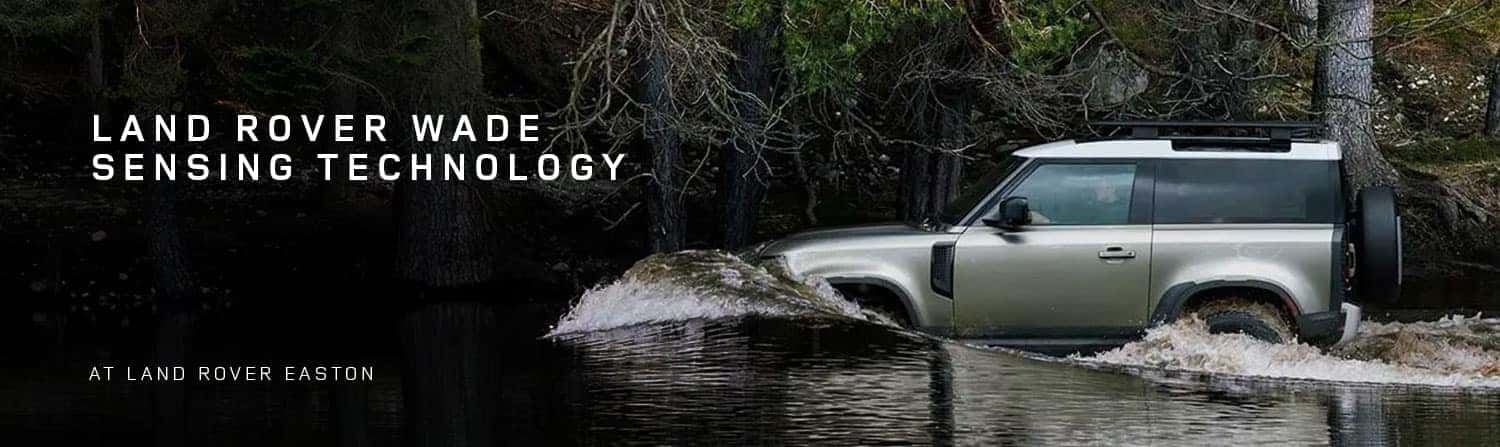
There is no question that Land Rover is known for luxury, but the company was built on a stellar reputation for building serious off-road vehicles, which continues to be the backbone of even the most luxurious of models. And when you’re going off-road, it’s not unusual to have to cross a stream or other body of water. And off-roading is so important to Land Rover, every vehicle in the lineup is equipped with Wade Sensing. Read on to see why this is a huge advantage.

What Is Wade Sensing?
Wade Sensing works in conjunction with your vehicle’s Wade Mode in order to greatly improve wading ability. Wade Mode will raise the suspension height of vehicles equipped with air suspension to its maximum, then you just need to go to the 4X4 menu in the infotainment system and select Wade Sensing. This will show a graphical representation of your vehicle, the maximum wading depth, and where the water comes up to on your vehicle. It uses a sophisticated series of sensors to achieve this, and it can warn you of potential hazards, including whether you’re near the wading limit for your vehicle, or if you have already exceeded it.

Land Rover Wading Depths
Wade Sensing might help you avoid hazardous conditions, but it doesn’t change the maximum wading depth of your vehicle. While this is listed on the Wade Sensing screen, it’s a good idea to check the depth of water before attempting to wade, so you’ll need to know the maximum depth for your specific vehicle.
Range Rover Maximum Wading Depth
| Range Rover | Range Rover Sport | Range Rover Velar | Range Rover Evoque | |
| Wading Depth | 900mm | 900mm | 530mm (coil) 580mm (air) | 530mm |
Defender Maximum Wading Depth
| Defender 130 | Defender 110 | Defender 90 | |
| Wading Depth | 850mm (coil) 900mm (air) | 850mm (coil) 900mm (air) | 850mm (coil) 900mm (air) |
Discovery Maximum Wading Depth
| Discovery | Discovery Sport | |
| Wading Depth | 900mm | 600mm |

Wading Tips
Wade Sensing is a powerful and highly advanced tool for crossing water, but there are a lot of useful tips for wading that have been around a lot longer. If you’re planning on heading off-road, it’s a good idea to bring waders or some other kind of high, waterproof boots. Walking out into the water on foot and using a stick to gauge depth can tell you whether the area where you’re looking to cross is too risky to attempt. You can also always watch another vehicle go through, if someone ahead of you has already scouted it out. As far as actually crossing goes, a slow and steady pace is the way to go, all while making sure you keep the steering wheel straight. Once you’re across, be sure to check whether any water has intruded into the cabin; it’s unlikely, but definitely something you should know about if it is happening. Then check around and under your vehicle, looking for any debris that might have gotten caught. Once that’s clear, you’re ready to go!